
By Shawn Perry
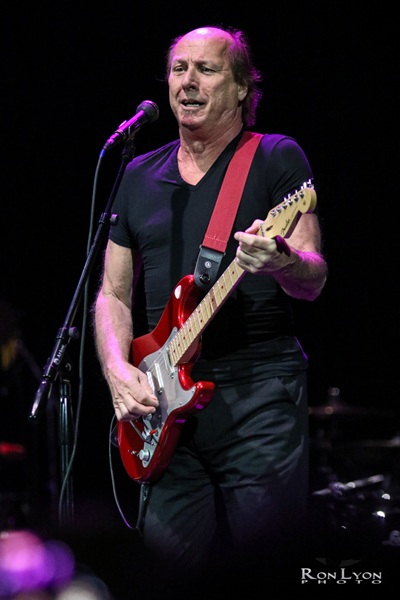
According to anonymous sources, “Neal And Jack And Me,” the opening song on King Crimson’s 1982 album Beat, reflects singer and the song’s lyricist Adrian Belew’s fantasies of joining Kerouac and Cassady on a car trip across the United States. Or maybe a tour of the seedy underside of Paris.
As the song winds down, Below sings out: “Absent lovers…absent lovers ” — rather apt when you consider the rampant whirlwind of activities he’s been involved with in recent years. And perhaps a bit too much on the nose when you see “Neal and Jack and Me” on the setlist for the shows around BEAT, the top tenant occupying Belew’s time for the past two years.
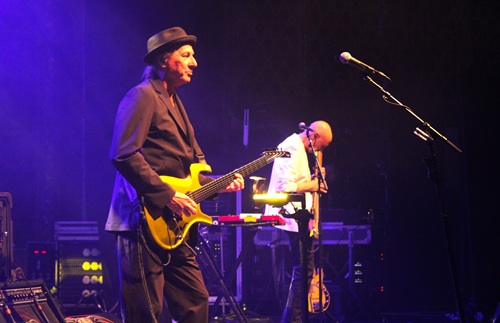
Indeed, the BEAT train has taken the singer and guitarist, King Crimson bandmate and bassist Tony Levin, guitarist Steve Vai, and drummer Danny Carey across North and South America, Europe and Japan. Clearly, there’s an audience for the repertoire: three King Crimson albums released in the early 1980s — Discipline, Beat, and Three Of A Perfect Pair. Most of the shows sold out shortly after they were announced. Even Robert Fripp, Crimson’s founding father, couldn’t stay away, popping up for two concerts with wife and current co-conspirator Toyah.
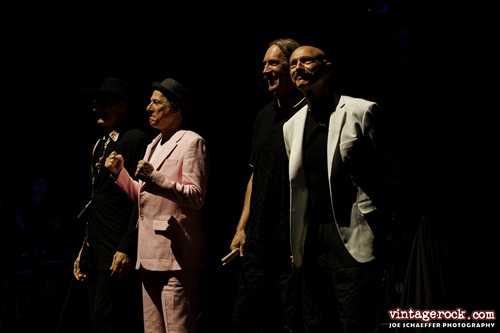
With a break in the action, I spoke with Belew about the next chapter for BEAT: a 40-concert U.S. Fall tour with Terry Bozzio taking the reins from Carey, who has commitments to fulfill with his main squeeze, Tool. Before jumping forward, I ask Belew if he is pleased with how well the BEAT project has been received.
“It has more than exceeded my expectations,” he says. “I had thoughts on the way I hoped it would go and basically hoping that the band would be so great that it could do all the material perfectly, but do it its own way as well. And I think that’s exactly what we achieved. With the pent-up sort of audience that I know about that’s on my Facebook and other places, I knew there would be a level of success.”
The idea for BEAT was hatched during conversations between Belew and musician, producer and promotor Angelo Bundini, known as Scrote. The two were part of the Celebrating David Bowie tour, which also featured Todd Rundgren. Belew initially asked both Fripp and Bill Bruford to join him and Levin, which would have reunited the King Crimson lineup of the early 80s. Having disbanded the latest version of Crimson, Fripp was supportive, but uninterested in being part of it. Bruford expressed similar reservations.
Once Vai and Carey signed on and the project was officially christened BEAT, a pragmatic approach was put in place when it came to moving forward with the tour. COVID was a major disruption, of course (yes, plans for BEAT stretch back that far). Schedules were another issue. Once the smoke cleared and the players were freed up, announcements were made, word got out, and the interweb, among other outlets of information, was abuzz. Even then, there was some trepidation.
“The producers I was working with just wanted to be very cautious,” Belew explains. “So, they booked us into places they thought were a little smaller than what we might be able to do.”
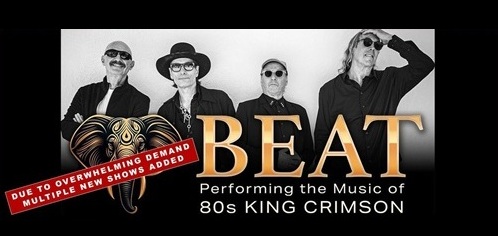
The payoff was surprising to many, least of all Belew.
“The first show went on sale, and it sold out in three hours,” he laughs. “That’s when I said to them, ‘Remember, I told you this was going to do better than you think.’ So, they started shuffling around, putting us in some larger places.”
After conquering America, BEAT moved onto South America (“Great!” is how Belew puts it), the Budokan in Japan (“Fantastic!” he exclaims), and most recently, Europe — “21 countries, 31 shows, and some of the greatest venues.”
Going to Europe to play King Crimson music was especially poignant.
“Some of these places we went to, they didn’t get King Crimson maybe ever or for a long time. We played Croatia. We played Estonia. We played so many places like that. Bulgaria and Turkey. A lot of these places I hadn’t been to for a while since COVID hit.”
Back on home turf, Belew proudly proclaims BEAT “a total success,” adding, “We certainly missed (some cities), not toured everything, but we’ve made the first circle, I guess.”
The second circle will be brief. After the fall tour, there are no plans for BEAT to carry on any further. In fact, it’s been announced as their “final” run, though Belew is quick to clarify: “This is the end of it — for now…”
He goes to explain the particulars. “Next year, nothing can happen with BEAT because everyone has other commitments, especially Steve. I mean, he’s taken a whole year away from it. So, I don’t know what’ll happen from there. There are other questions about it. What do you do next? I mean, I don’t think any of us want to continue to play the same 80s music for the rest of our lives.” He laughs. “We’ll have to see what can be done. And I’ll wait.”
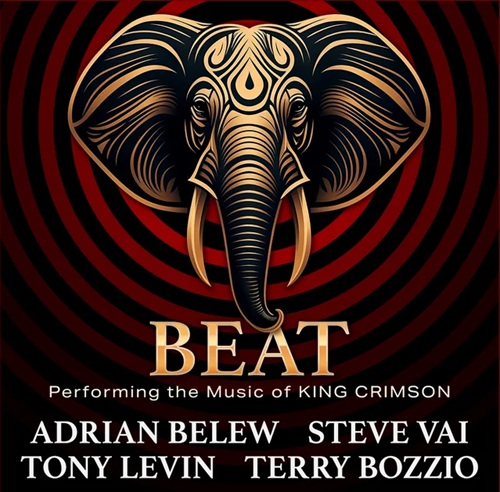
As for the recent shift in personnel, Belew explains there was no shortage of choices for Carey’s replacement.
“I had reasons for every drummer that I called, and I called quite a few very famous drummers. Stewart Copeland, for one. He was really excited about it, but he did have two engagements he could not get out of. He spent the next day trying to.
“I was the one calling them. When it got to Terry, I had Steve call because they’re closer friends. They worked with Frank (Zappa), and they did other things over the years. Tony played with Terry, so Tony was very into seeing Terry be in the band. Of course, Danny is in the band. He’s the drummer in the band, so I don’t want anyone to think that there’ll never be another Danny Carey moment.”
With Bozzio currently residing in Japan and rehearsals for the tour at press-time not yet underway, there’s an air of mystery around what will happen, especially when it comes to gear. Anyone who follows Terry Bozzio knows he has the proclivity to go big. This could possibly pose issues around space constraints and room for other players — of which Belew is only too aware.
“We had a talk with Terry,” he says, “and we were gingerly kind of approaching that. I said to him, ‘You’ve seen Bill (Bruford). What he did and the kind of kit that he had when he did this music, right?’ I was trying to suggest kind of subtly that that’s probably all you need.”
Then they just came out with it: “Are you thinking of using the Big Kit?”
For those unfamiliar with Bozzio’s infamous “Big Kit,” here’s how it breaks down: 36 acoustic drums, two electronic pads, 53 cymbals, and 22 pedals, plus mallet instruments and extras. Press accounts estimate a 100 to 115+ piece kit. Even though it’s transported on its own trailer, it still requires an entire day to set it up for a show.
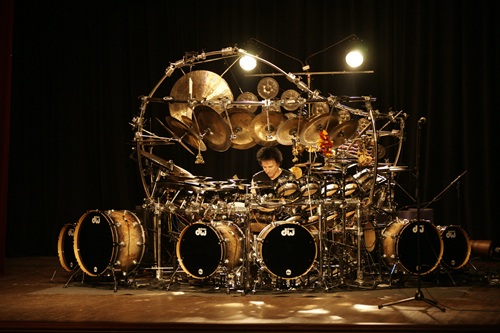
Fortunately, according to Belew, the drummer’s reply was somewhat of a relief.
“‘No, no, no. I’ve got another kit. Go to my website. There’s another kit on there you can look at while we’re talking on the phone,’ he said. ‘I call it my Sick Jazz Kit.’ And we looked at it, and it was pretty substantial. He said, “Well, it only has three bass drums.”
Belew laughs at the notion of Bozzio’s Sick Jazz Kit.
“I’m thinking to myself, a jazz kit is kind of what I play in my studio. Four drums and two cymbals, you know? But hey, we want Terry to do what he wants to do. I don’t like holding people back. If somebody said to me, ‘No, you can’t bring that much gear,’ it would not please me.”
When it comes to the caliber of musicians within BEAT’s ranks, the tools of the trade are part of the bargain. Considering the style of progressive rock the band plays and the fans they draw, it’s pretty much a given. Belew knows that better than anyone and he’s excited about this next phase of BEAT.
“I think Terry Bozzio will definitely take us to a different place, there’s no question about that. He’s that kind of drummer. He really has developed entirely his own style. I was worried that he would even be able to play with a band because for so long he’s done sort of a one-man show. But the fact that he felt like, ‘Absolutely, I can do this.’ I have so much faith in Terry. I was always really just so impressed by his ability because he could play anything. This is a guy who can play ‘The Back Page’ by Frank Zappa, supposedly one of the hardest pieces in the world.
“So, we have a new Superman drummer. That’ll change the complexion of the music. I do want to do three or four things from the 90s (i.e., King Crimson’s 1995 release Thrak). That’s a six-piece band, but there are pieces I know we can play with this band as a four-piece band. I think it’s time to take out some of the ones in the 80s set that aren’t my favorites and replacing them with better songs.”
Getting back to the future of BEAT, Belew is as ambiguous as he is adamant that it will continue in some form at some time or another.
“I don’t know when this will end, where it’ll go from here. We just have to go through the rest of this year and do what we’ve got. I think it’s going to be a fabulous tour.”
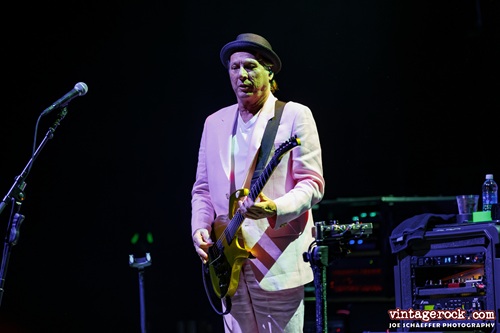
As for next year and how he’ll spend his downtime, Belew has a rough laundry list of activities on the 2027 calendar he’s hoping to pursue.
“I’ll tell you what I’m going to be doing for next year. First of all, I’ve cleared my schedule for doing Remain in Light or David Bowie. I don’t know that I’ll ever do those again, but I know I won’t be doing them next year.
“I’m going to try to start recording again at the very beginning of the year and see how far I get. I have a lot of material that’s just sitting there unfinished. And it’s been that way for three years ever since we started BEAT because there hasn’t been time.
“I’m looking at whether or not I can really go out and put together a power trio or a power quartet kind of thing to do some touring to catch people up with my solo music. I know it’s been sort of languishing ever since I’ve been touring so much with BEAT.
“Personally, I have a lot of things that I need to attend to. We’re in the place where your house now starts to need things.”
He pauses for a second. The man who sings about “absent lovers” has been an absent homeowner. When you live in the middle of Tennessee, that can be a challenge. Belew seemingly contemplates this before admitting: “I would be happy to do nothing next year, to be honest.”
Whatever happens, Belew assures me he’ll “definitely do something that’s creative.”
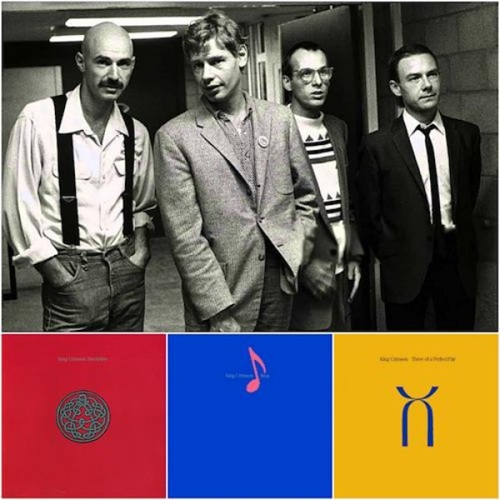
Before finishing up, there’s a couple of questions about King Crimson. Did Belew happen to catch the last incarnation that completed their tour of duty in 2022?
“I did not,” he answers swiftly. “My intention was to never see them because it hurt. It was not a good experience for me to watch another team walking by. I’d rather be in the parade than be on the sidewalk. I basically kind of forgot about King Crimson in that time. I felt it was better for me to stay in my own my own little universe.”
Still, he has fond memories about being part of the band’s colorful history.
“I put it top of the list in terms of being in a band and being able to create a body of work. When it was handed to me on a platter by Robert in 1980, I couldn’t have been happier even though I knew how hard the work was. It was what I had been waiting for. Up to that point, I’d been a side man to some pretty great people.
“I had started my whole thing from the beginning thinking I would write songs and be in something successful. King Crimson gave me that. For 33 years, I thought Robert and I were great writing partners and great guitar playing partners. I thought the band was always amazing.”
Ask anyone who’s seen BEAT, and they’ll likely agree the music of King Crimson back then, before and since, has never stopped being anything short of amazing.