
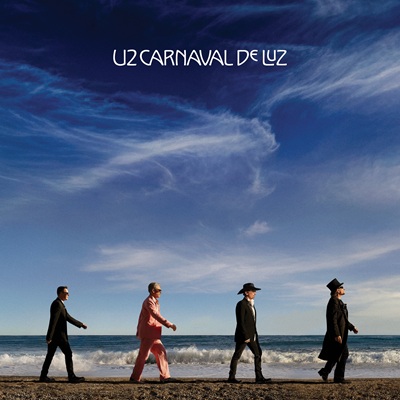
Despite the long lapses, studio albums of new music from U2 have managed to stay inside the Top 10 since 1987. Their 2017 release, Songs of Experience, was the band’s eighth chart-topper in the United States, effectively making them the first group with Number One albums in every decade since the 1980s. Nine years later, it’s not a matter of whether U2’s Carnaval De Luz will maintain the momentum: it’s more of matter of if it makes any difference.
A lot can change in 10 years, and while U2’s place on the rock and roll roadway is assured, it’s shifted over to the nostalgia lane. Like the Rolling Stones and Paul McCartney, they can make a new album, throw out the hype, and receive relatively strong receptions. Like so many things, however, latter-day albums by older mega artists tend to lack staying power. Are fans going to replay Carnaval De Luz like they did The Joshua Tree and Achtung Baby? A rapidly changing musical landscape is a challenge U2’s 16th studio album seems to take seriously enough to warrant a spin.
Never one to shy away from sturdy industrial electronic structures interspersed with dance music forms, “Go (Carnaval De Luz)” is a short little trot through the tulips that flatly segues into the punchy “La Reina,” the first of many U2ish melodies on the record. Indeed, there are dashes of U2isms everywhere — the guitar tingles on “The Mirracle Maker (Rosalia),” the Spanglish inflections on “Silencio,” the “I Still Haven’t Found What I’m Looking For” vibe of “The Greatest Show On Earth.” Carnaval De Luz does indeed possess many of those trademarks, with a few tributaries that either thrive or die on the vine.
“Street Of Dreams” swims upstream without getting caught up in the gimmicks, and is clearly built for the concert stage. “Midnight Sunshine” suffers from its own light-hearted cheekiness and is fortunately rescued by “Can’t Stop Us Now,” arguably the album’s strongest contender. The mood, elegantly established by the master of ambient layers Brian Eno (who plays synths and co-wrote three of the album’s songs), is at once wide, wonderous and mysteriously optimistic.
We fall right into the album’s final track “Torn,” a duet between Bono and Dolly Parton, which is reportedly the country legend’s final recorded vocal performance. Gratuitous or not, the song, featuring Daniel Lanois on pedal steel, serves as a poignant reminder of severed family ties and beyond — and the soothing grace of Parton’s presence makes it all the more authentic. Hard to say if that applies to the rest of Carnaval De Luz. It may not tap into the drama and dalliance of the band’s earlier works, but you can’t fault it for lack of trying. Where it lands on the spectrum could very well determine its fate in a body of work that’s, at this point in the story, less about evolution and more about preservation.
~ Shawn Perry