
By Shawn Perry
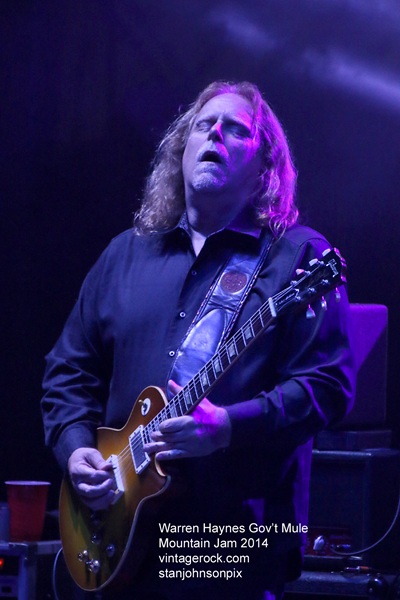
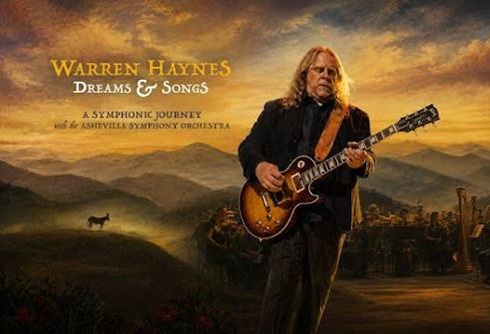
Warren Haynes is doing alright living out his dreams. Working his way around with various outfits in the late 70s and 80s, the singer, songwriter, and guitarist’s life changed when his role with the Dickey Betts Band led to him becoming a member of the Allman Brothers Band in 1989. Being part of the iconic southern rock band afforded Haynes numerous opportunities. You could say he seized the day, and then some.
Haynes established Gov’t Mule in 1994 with Allmans bassist bandmate Allen Woody and Dickey Betts Band drummer bandmate Matt Abts. The power trio introduced a hard-rock sensibility to the jam-band community that put a scare into contemporaries like Phish and Widespread Panic (not really, but it sounds good on paper). Haynes and Woody left the Allman Brothers Band in 1997 to put more time into Gov’t Mule. Three years later, when the bassist passed away tragically, Haynes came back to the Allman Brothers Band, teaming with wunderkind slide guitarist Derek Trucks, and staying on until the band dissolved in 2015.

More dreams came true along the way.
He released solo records, starting with 1993’s Tales Of Ordinary Madness, which was remixed and reissued at the top of 2026. The Mule, with new personnel, continue to dominate the jam-band circuit. Haynes stepped up alliances with prominent musicians, most notably surviving members of the Grateful Dead for shows with Phil & Friends and The Dead. He also played on and contributed songs to records by Peter Frampton, Garth Brooks, Joe Bonamassa, John Mayall, Blues Traveler, Corrosion of Conformity, and dozens of others. Demand for Warren Haynes and his extraordinary talents remains unabated. Even Dolly Parton included him on her last album.
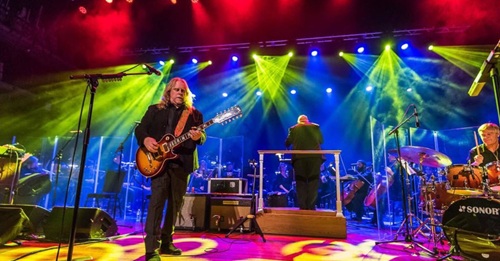
To help sum up his career, Haynes staged a show in 2019 at the Thomas Wolfe Auditorium in his hometown of Asheville, North Carolina. It was on this night that musician presented his Dreams & Songs Symphonic show alongside the 64-piece Asheville Symphony Orchestra, plus a lineup of players that included ABB bassist Oteil Burbridge, John Medeski on organ and keys, Jeff Sipe on drums, Greg Osby on saxophone, with Edwin McCain and Jasmine Muhammad on background vocals.
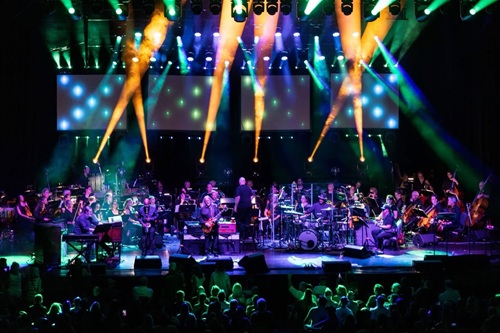
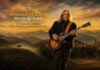
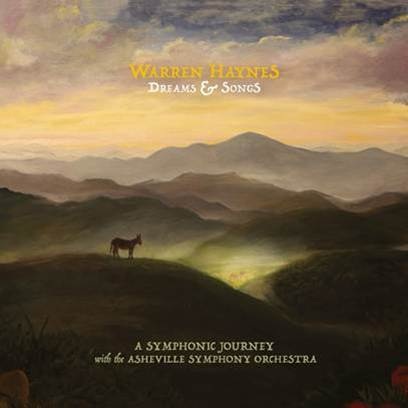
Seven years later, a recording of the show called Dreams & Songs: A Symphonic Journey is now available for public consumption. Co-produced by Don Was and Haynes, this an exploration of the highlights and influences around Haynes’ 30+ year career with music from Gov’t Mule, Allman Brothers Band, The Grateful Dead, solo albums, and more — enhanced with new orchestral arrangements.
I had a chance to speak with Haynes about the show, the songs, the arrangements, and how it all came together. At the time of this exchange, he was on a short break before Gov’t Mule embarks on a 16-date co-headlining fall tour with Ziggy Marley. Terrence Higgins will continue filling in on drums for Matt Abts, who’s been sidelined with medical issues for nearly two years. “We’re hoping he’s back very soon,” Haynes told me.
One other thing. While grateful for being able to live out so many of his dreams, Warren Haynes assured me he still has a few more he’d like to cross off his list…
~
Dreams & Songs: A Symphonic Journey was recorded in 2019 in Asheville, North Carolina, your hometown. And you played alongside the 64-piece Asheville Symphony Orchestra and a band of handpicked players. What do you recall about getting this show off the ground?
It was a lot of work putting it all together — picking the songs, picking the arrangers to arrange the music for the symphony, getting all the musicians together and rehearsing. But (it was) a labor of love and definitely something that I really enjoyed.
How did you determine which songs would work with an orchestra?
Well, I think more often than not, rock songs or pop songs or even jazz don’t cry out for that sort of treatment. It’s kind of the exception rather than the rule. I’ve never been a big fan of marrying orchestral music with pop music or rock or jazz just for the sake of doing it. I think it’s a song-by-song decision. So luckily, I was able to have a lot of material to choose from, so we only chose stuff that we thought worked really well — that would enhance it and take it to another place.
Let’s talk about the title track “Dreams & Songs,” which opens and closes the show. This is a song that touches on the passage of time, memories of your past, yet life has its challenges and you need dreams and songs to get you through it. Would you say it is autobiographical in that sense?
Yeah, I think that’s a fair thing to say. It was Don Was’ idea to make that the title. I don’t know if I had decided to open and close with it before or after he brought that up. I thought it worked perfectly.
Watching the video of “Thorazine Shuffle” really shines a light on the breadth of the show and how you, the band and the orchestra interacted. I read John Medeski had a big hand in the arrangement. Can you talk about putting it together?
Yeah, Medeski did “Thorazine Shuffle” and “Instrumental Illness,” two of the more complex pieces on the record. He has a background in orchestral arranging and we’ve played together and worked together so many times. I was intrigued to see where he would go with both of those tunes. And in both cases, he really did a marvelous job of keeping some sort of orchestral tradition, but also making it pretty avant-garde.
You’re no stranger to playing Grateful Dead music because you did with it The Dead, Phil & Friends and with an orchestra during the Jerry Garcia Symphonic Celebration tour in 2016. In Ashville, you played “Shakedown Street,” “Black Peter” and one my favorites of theirs “Terrapin Station,” which was originally recorded with an orchestra. Were there others up for consideration?
I had picked all the material from that catalog to do for the Jerry Garcia symphonic celebration and presented my arrangements to the orchestral arrangers that were chosen to do all those symphony arrangements. Those were three of my favorites from that experience. The “Terrapin Station” arrangement obviously makes sense because the original had an orchestra and they weren’t able to replicate that, for the most part. So being able to do that was really fun, but then going into “Slipknot” in the middle and back into “Terrapin Station” was really cool, unique and fun. Steven Bernstein did the arrangement for “Black Peter” and it’s very New Orleans-esque. I’m really happy with the way that turned out. Sean O’Loughlin (Josh Groban, Sara McLachlan) did the one for “Shakedown,” and it’s really cool and interesting.
You recently played Jerry Garcia’s Wolf guitar. How did that feel?
I love the fact that it just transports the songs to another place, you know? I actually have a Wolf replica now, and sometimes it gets confusing as to whether I’m playing that or the original one, because I played the original one on both of the Garcia Symphonic Celebration tours, so I’m no stranger to playing the Wolf, but now that I have an actual replica of that guitar I’ve been pulling it out some as well. It’s a beautiful instrument.
During your first years with the Allman Brothers Band, I’d think you would have had the opportunity to meet Garcia, but I read you didn’t. True?
Yeah, I never met him. I had the opportunity one night at Madison Square Garden. My wife and I were guests of Bruce Hornsby. Hornsby set us on stage right behind his piano, and we watched the whole show that way. It was a night that Jerry was struggling a little bit, so there was some tension on stage. Someone asked: “You want to go back and, and say hi to Jerry?” And my response was, “No, I’ll wait and do it another night.” Of course, a valuable lesson learned — there was no other night. So that was a mistake on my part.
I think The Dead was, after Garcia passed, the best band ever to play Grateful Dead music with the original guys. Dead & Company was cool in its own way, but there was something more authentic with you playing with those guys. How did you land on their radar?
My involvement with the Grateful Dead came through working with Phil (Lesh), which was an amazing experience. When I started playing with Phil, he had this idea of reinterpreting that music, and he didn’t want anybody to play or sing like Jerry. He just wanted everybody to bring fresh ideas and demonstrate how elastic those songs were and how interpretable that catalog was — and how great music can be interpreted in endless different ways. I thought that was a beautiful challenge, and that led to a decades-long friendship and working relationship. A few years later, I played with Bob (Weir) for the first time, and we hit it off from the beginning. Playing with all those guys together was such an honor and such an experience. I had a wonderful time.
U2’s “One” is an interesting choice and a song with its bare, hymn-like arrangement that addresses difference and obligation — “We’re one, but we’re not the same / We get to carry each other” — you know the rest. Where does it fit into your musical story?
I performed that by myself a few times when I first started doing solo shows. There was a version on my Live At Bonnaroo record, and a lot of people gravitated toward that version. So, I would include it from time to time. It was a beautiful song. Back then, I was just kind of demonstrating what a wonderful song it is when you strip it down to just voice and guitar. But in this case, going the opposite and adding the full orchestra, it has a whole other interpretation.
That brings me to the Allman Brothers Band and the two songs you feature on Dreams & Songs. “Dreams” seems like a given but how did you go about adding strings to “Whipping Post”?
Medeski and I were talking about it one night. He didn’t do the arrangement; David Campbell did the arrangement of “Whipping Post” and did a fantastic job. But Medeski and I were talking about “Whipping Post” one night and he mentioned the original version was kind of like an orchestration in its own right with that ascending line at the end and all the counter melodies. It was kind of rock orchestration from the very beginning. I have such a deep relationship with that song, playing it so many times with the Allman Brothers. It’s the ultimate show closer.
We actually opened with “Whipping Post” one time during my tenure with the Allman Brothers. That’s the only time it was not a closer. I think it was even my idea to open with it. We opened with it in Boston and it was fantastic. But then, where do you go from there? (laughs) Including “Dreams” and “Whipping Post” for this project made sense to me. They’re both pieces that I think are signature songs, two of my favorite Allman Brothers songs, but also ones that we can utilize improvisation to a great extent.
I saw you and Derek Trucks play together last year when Gov’t Mule toured with Tedeschi Trucks Band. When you two were with the Allmans, I truly believe you took up the reins from where Duane Allman and Dickey Betts left off. When you two play together, are you mindful of that?
I’m not consciously thinking about it, but it’s always in the back of our minds, the reverence that we have for what they bestowed on the world. He (Derek) and I are such enormous fans of what they did that we want to always honor that. And sometimes the best way you can honor it is by bringing your own personality into it.
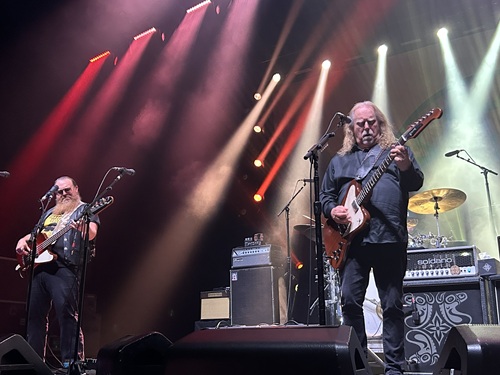
Govt. Mule just completed a summer run with Joe Bonamassa and head out with Ziggy Marley for the Dreaming The Same Dream fall tour. You’re definitely one of the hardest working bands on the road today. I’ve seen the Mule several times, and marvel at how every player can read and bounce off each other so effortlessly. How do you consistently keep it at such a high level?
The chemistry that the four of us have is pretty uncanny. We’ve been really having a great time the last three years or so since Kevin Scott joined the band on bass. It’s just one of those things where the improv that we’re capable of is due to this uncanny chemistry that happens that is hard to describe. You can’t force it, you can’t dictate it, it just kind of happens on its own. We love playing together. We love the fact that 30 something years later, we’re still expanding on that philosophy and that there’s an audience that not only encourages, but really loves that approach to music.
Any plans for a follow up to Peace…Like a River (Gov’t Mule’s most recent studio release from 2023)? Or are you working on something else?
I’ve been thinking about the possibility of some instrumental jazz-influenced record. I don’t know if that would be a Gov’t Mule record or a solo record or a collaborative project, but that’s something I’ve been wanting to do for a long time. I would really love to get Gov’t Mule with Kevin Scott in the studio. All those things are front and center.
As far as other projects, I heard something about releasing something from the show you did at the Caverns here in Tennessee.
Yeah, it’s going to be a PBS special (The Caverns Sessions with Warren Haynes airs November 4th). I’ve been writing a lot of music that’s somewhere in between my Ashes & Dust record (released in 2015) and my newest studio record, Million Voices Whisper (released in 2024). That’s something that I feel like I’m getting closer to as well.
You’ve written and played on quite a few songs about dreams. Looking over your career, would it be fair to say that many of your dreams have come true?
Absolutely. I wonder sometimes if my life is a dream, you know?
Are you still dreaming?
I’ve never played Royal Albert Hall. Up until a few years ago, when I played with Willie Nelson for his 90th birthday, I had never played the Hollywood Bowl. There’s some people still that I’ve never played with like Paul McCartney. I would obviously love any sort of collaborative opportunity, even if it was just like jamming or whatever. But, you know, those kind of things usually come about organically.