
By Greg Prato
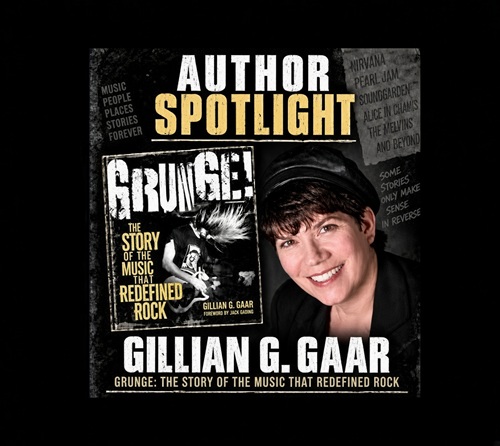
Few writers have documented the Seattle grunge explosion and the rise of Nirvana as extensively as Gillian G. Gaar. The author of Entertain Us: The Rise of Nirvana and World Domination: The Sub Pop Record Story, among numerous other books, Gaar has spent decades chronicling the artists, albums, and cultural shifts that helped redefine rock music in the late 1980s and early 1990s.
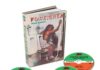
Gaar’s latest book, Grunge! The Story of the Music That Redefined Rock, revisits that era through a splendidly illustrated account featuring rare photographs, memorabilia, and stories from the people who helped shape the Northwest music scene. Drawing on her own archives and connections with Seattle photographers, the book offers readers a unique perspective on a period that has been extensively documented but still holds plenty of surprises.
In this interview with Vintage Rock, Gaar discusses the inspiration behind the book, what distinguishes it from previous grunge histories, her favorite albums from the era, and what it was like to see Nirvana perform in both large arenas and intimate clubs.
~
How did the idea come up to do this book?
Well, it kind of goes way back. I mean, I’ll confess my dream to you – when I read Jon Savage’s book, England’s Dreaming, I wanted to do England’s Dreaming for the Northwest music scene. And so I was always trying to think of ways to do that. And I haven’t been able to do that yet, and I wonder now if I ever will. I’ve thought that if you took my book Entertain Us: The Rise of Nirvana, World Domination: The Sub Pop Record Story, and this book Grunge!, and mashed them all together, that might get kind of close.
How is this book different from previous books about grunge?
Well, for one thing, it’s one of the few that is written by someone who was there and lived through that whole period. Because you and Michael Azerrad (in reference to the books Grunge Is Dead: The Oral History of Seattle Rock Music and Come As You Are: The Story of Nirvana, respectively), I think maybe the last one might have been Clark Humphrey’s book, Loser, which I’m not sure if that’s still in print from Ferrell House — that came out a long time ago. His was broader, and personally, I think the style was a lot drier than mine. So one, I was there, so you had kind of that personal insight. And I don’t think there’s ever been an illustrated book like this. Y’know, Motorbooks and Quarto, they’re big on the illustrated books. They’re kind of really heavy-duty coffee books, because it’s not quite enough for a big book. But then it’s more than just a coffee table book, which generally has a lot less text. So, they’re visually very interesting. I mean, my Elton John book (Elton John at 75) was nominated for a design award in Scotland.
And actually, a lot of the images weren’t just from their photo researchers. I gave them the names of various photographers here in Seattle that would have maybe shots that weren’t quite as well known. Like, they had Charles Peterson and Lance Mercer and Karen Mason Blair, who all are in the book, and my own stuff. I have all these boxes of things. I actually went through everything and the photo boxes, and I had no idea what they would end up using. But there’s a lot of things that I contributed that haven’t been seen. Everett True, the journalist, he got a copy recently, and he messages me to say, “I’ve never seen that picture of myself with Susan Silver.” That was one of my better shots that was on film, actually, from late ’80s, maybe early ’90s. They were at some music industry event in Seattle, and they’re both in the book because Everett was so key to spreading the word about grunge and Susan Silver, obviously manager of Soundgarden and Alice in Chains and Screaming Trees. So, it was nice to find that one. I thought, “Yeah, this will work!”
I was going to mention, besides the wealth of info, there are really some outstanding photos in the book. Was it difficult to select the pictures that wound up making the cut?
Well, I actually wasn’t involved. That was all on the design end. In fact, I turned in way more images than I knew they would ever use, but then you don’t know what they’re gonna like. So, when I first got the PDF, it was a surprise to see what was included. It’s nice to see there’s a pass to a preview screening of the movie Singles, which was at the Harvard Exit Theatre, which is no longer around. So there’s two nostalgic things there that were fun to see. Or passes — invitations I would get to industry events. There’s one for Bite Back, the release of that album (a compilation of grunge bands, whose proceeds went towards Planned Parenthood and Northwest AIDS Foundation). So yeah, people have commented there’s stuff they haven’t seen — which is always nice to hear, because you know people have seen so much now, and people are always putting things up online. So it’s nice to have little surprises like that.
What are some of your favorite grunge albums of all time?
Well, definitely (Nirvana’s) Nevermind, because that was probably one of the ones I played the most. I don’t know if you’d count Sleater-Kinney as grunge, but certainly Call the Doctor. That was probably another one I played a lot. God, love that album. And I played the first Foo Fighters record a lot [self-titled]. I remember when that came out, how exciting that one was. I should probably put one of The Gits albums in there, which I didn’t listen to as much at the time because I was listening to Seven Year Bitch – because they were so much fun to follow. They were so charismatic. Well, gosh, you probably have to put Sub Pop 200 there, just because it was such a great sampler, even beyond Deep Six. Well, heck, I’ll throw Deep Six in there, and then Sub Pop 200 — not 100, 200 — because that was not just all Sub Pop bands. Y’know, you had Nirvana and Soundgarden, but the Walkabouts were also on there, and Steven Jesse Bernstein was in there, and I think there was a Beat Happening song or a K Records band on there…or Girl Trouble, they’re on there. I felt that was a good representation of the Northwest sound. It wasn’t just all the heavy stuff. You had things like the Walkabouts, who maybe you’d call them “alternative folk” or something — because they rocked a bit harder than folk.
What was it like to see Nirvana live?
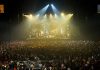
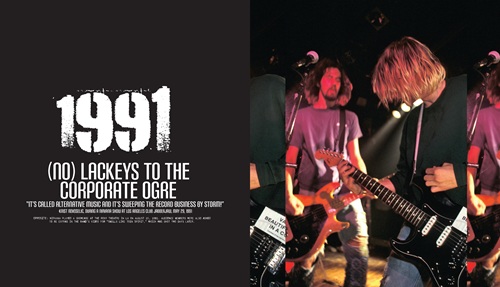
One of my favorites was in in September ’92. They’d done a big show at the Seattle Coliseum, and that was fun. But then it was really great, the next month, they did this secret show at The Crocodile, which was a small club. So yeah, it was really great to see them in a space like that. They were opening for Mudhoney. Mudhoney’s new album was out (Piece of Cake), so they did a show at Bellingham on the university campus there. So that probably should have been a bigger place, but yeah, seeing them in a smaller venue was just a lot more exciting. It just here’s an intensity that you don’t get at an arena show unless…I don’t think you get it even if you’re in the front rows because they’re on this huge stage and they’re kind of up there. And you can’t even see them that well. Footage of the show that they did at the OK Hotel where they first played “Smells Like Teen Spirit” live, I mean, you do get a sense from that of the intimacy. I was never down front because I wasn’t a mosher. But standing a bit further back and just that energy that’s generated by being so close, and it was just more of a communal feeling. Or I remember I saw Soundgarden at CBGB’s. This is before they got big. Let’s say, 1990 or something. And actually it was funny because the crowd was just kind of more relaxed. They weren’t really up front and packed like [you’d assume] they would have been.
Do you have any other book projects on the horizon?
Yeah, I just finished one. It’s coming out next August — Elvis: Album by Album. I used the box set, The Album Collection, as my guide. And there’s 57 albums — and that’s not all the stuff that wasn’t on albums, which was its own issue. Next August is the 50th anniversary of Elvis’s death.